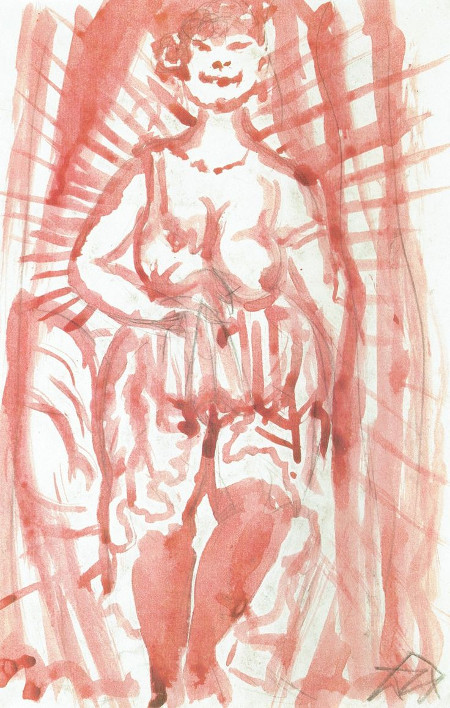
Prostitute
Year: 1913
Description: From the earliest stages of his career, Dix depicted prostitutes. In his hands, they could be both grotesque and inviting at the same time.
Provenance: Städtische Galerie Albstadt
- Albstadt
- Walther Groz Foundation
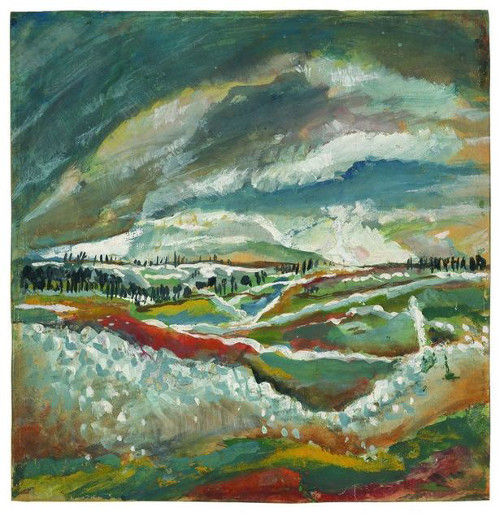
The Trenches Near Reims I
Gräben vor Reims I
Year: 1916
Description: The landscape is lush and green and flowers cover the fields. In this war time piece, Dix captures the calm before the storm. He was working with gouache on paper from a vantage point overlooking the Reims river in France.
Dix was stationed along the Reims in June 1916.
Provenance: Private collection
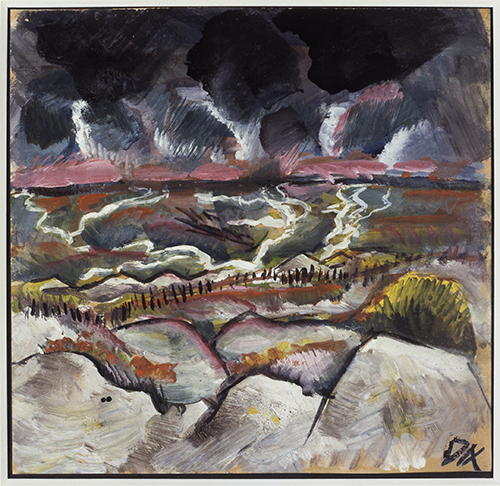
The Trenches Near Reims II
Gräben vor Reims II
Year: 1916
Description: A once tranquil Reims valley is now decimated by war. The landscape is bumped and bruised. Anger flows from the gouache Dix works furiously across the paper. The ruggedness of the landscape is accentuated with thick black lines.
There was never much time along the front to refine a work of art. An artist never knew how much longer he had to survive. Dix's war time pieces contain a sense of urgency. He must complete them while he can.
Provenance: Private collection
- Estate of Otto Dix

Jägertrichter (Vimy)
Year: 1917
Description: In preparation for the Battle of Vimy Ridge, Allied mining companies tunneled under German positions and laid multi-thousand pound mines. Their intent was to destroy fortifications before the assault. Large explosives opened huge craters that were incorporated into the military landscape. His intentions aside, the crater resembles some human anatomy. Gouache on brown paper.
Provenance: Private gallery

Hand To Hand Fighting
Year: 1917
Description: In a two drawings in 1917, Dix presents his depiction of the cycle of life. At the time, he was eye-deep in mud and war defined his existence. In this first view, soldiers are locked in deadly fighting. They are participants in an orgy of gratuitous violence. It's hard to imagine that any will survive.
This represents an experimental style for Dix. It is reminiscent of orphic cubism which found its voice in Paris before the outbreak of war. The geometric patterns allow him to roll the participants into a single turbulent mass. The style provides movement, texture and chaos.
Provenance: Private Collection
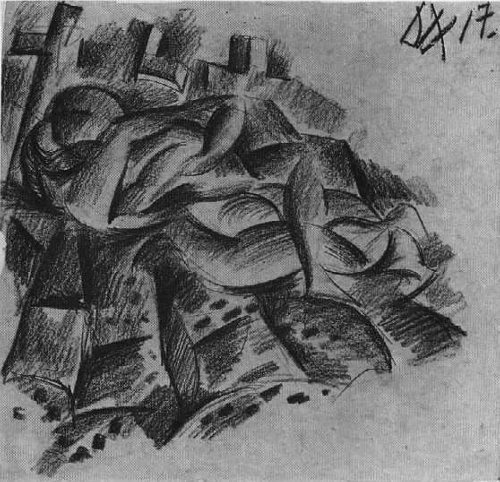
Lover's Grave
Year: 1917
Description: In this second drawing, Dix completes his cycle of life. The soldiers are dead and tucked in their graves. Lovers embrace amid the tombs to create another generation of cannon fodder. Again Dix experiments with orphic cubism which allows him to intertwine his lovers.
Provenance: Private collection
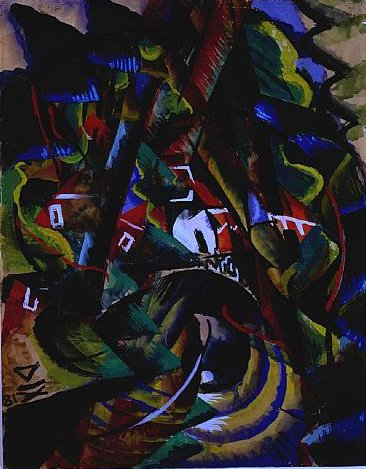
Black Bridge
Year: 1919
Description: Gouache.
Provenance: Collection Triton Foundation

Seaman and Girl
Year: 1919
Description: As an infantry soldier, Dix appeared to harbor a great deal of resentment towards Navy men. They are often depicted drunk and in the company of whores while soldiers are shown in a more sympathetic manner. Black ink on brown paper. More
Provenance: Private collection
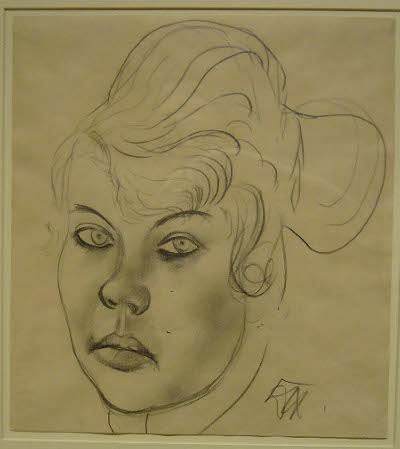
North German Girl
Year: 1920
Description: Dix is particular in the area he finds most important: her facial expression. Details dissipate as he works further and further from her eyes. Graphite, with stumping, on cream laid paper.
Provenance: Art Institute of Chicago
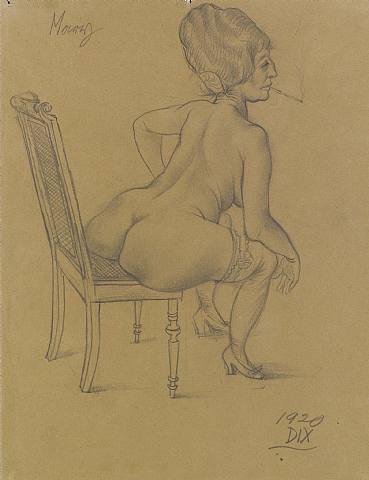
Mary
Year: 1920
Description: In a period of war-and-postwar rationing, Dix's prostitutes are generally well fed. Their girth stands in contrast to the diminutive soldiers who patronize them.
Provenance: Private Gallery
- Pencil signed and dated
- Inventory of Richard Nagy